
Why Mould Surveys Are Too Slow: Data From the Field

Mould surveys are often treated as the first “proper” step in a damp and mould case. A tenant reports a problem, the landlord schedules a visit, someone inspects, and (sometimes) a sample is taken for analysis.The problem is that this workflow is slow by design.Damp and mould risk is time-sensitive. It escalates quietly, often behind […]
mVOC Explained: The Science of Detecting Unseen Mould

Most mould detection still relies on what people can see or smell. By the time mould is visible on a wall or ceiling, it has usually been present — and active — for weeks. This is where mVOC sensing comes in. What are mVOCs? mVOCs, or microbial volatile organic compounds, are gases released by microorganisms […]
How AIRaware Detects Mould Before You See It

Ever walked into a room and thought, “Smells like mould”? That musty smell comes from microbial Volatile Organic Compounds (mVOCs) — gases released by mould, fungi, and bacteria during their metabolism. Humans can smell these compounds because they often signal unhealthy environments. Why mould develops Mould starts growing on damp surfaces. Moisture from leaks, condensation, […]
Why Temperature & Humidity Sensors Fail to Predict Damp & Mould
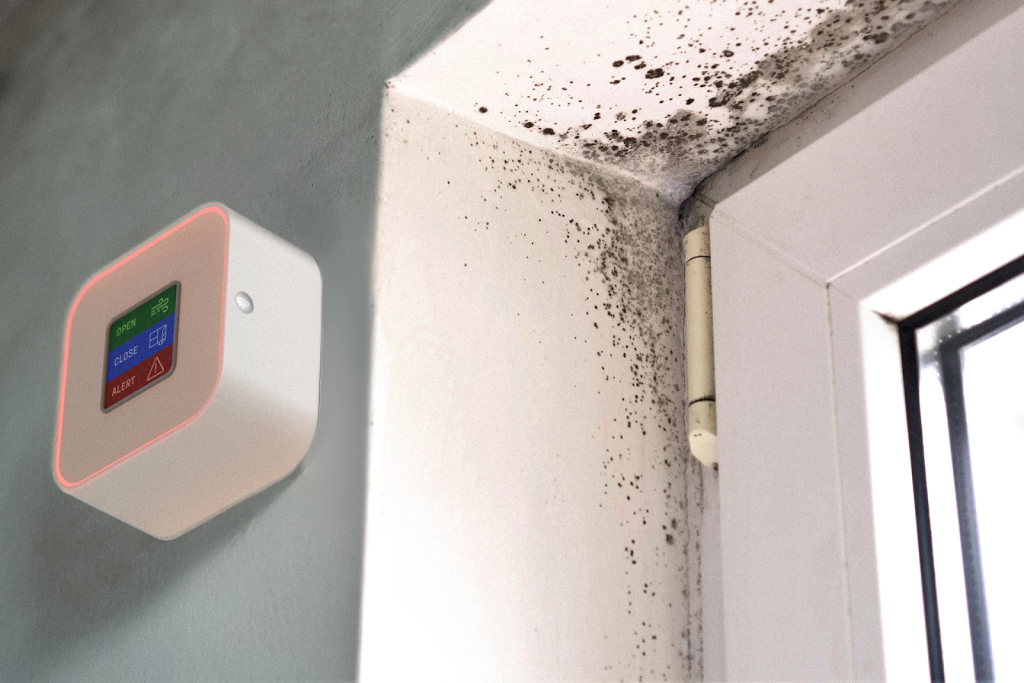
For years, social landlords have tried using basic temperature and humidity sensors to stay ahead of damp and mould. They’re inexpensive, easy to deploy and widely available — so on paper, they should help. In reality, they don’t. Housing teams tell us the same thing repeatedly: “The data doesn’t match what we see on the […]